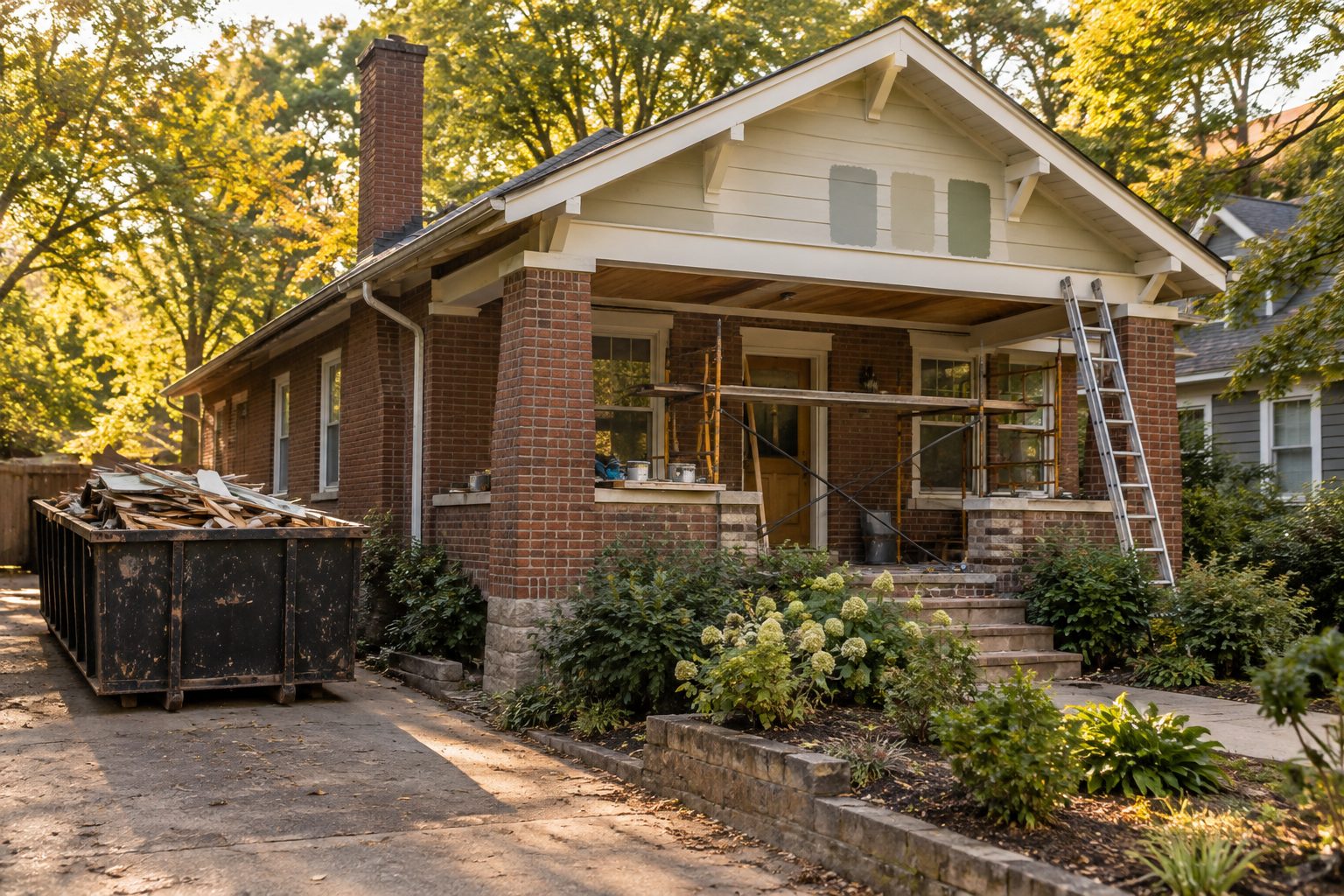
A fixer-upper in Nashville is worth it when the discount is bigger than the full cost of repairs, permits, financing, insurance, and a slower resale. It stops being worth it when foundation, drainage, flood, outdated systems, or unpermitted work eat the savings. Verify each house by address before you offer.
Is buying a fixer-upper in Nashville worth it?
Is a fixer-upper in Nashville worth it? Sometimes, but only when the discount you get on the purchase price is larger than the full cost of the project, including permits, inspections, financing, insurance, and the time it takes to sell later. It stops being worth it when structural, drainage, flood, outdated-system, or unpermitted-work problems eat the savings. The way to know is to check the specific address before you make an offer, not to fall in love with the renovation idea first.
Key Takeaways
- In September 2026, 2,885 homes sold across the area covered by Greater Nashville REALTORS®, essentially flat year over year, with average market time above 55 days and excess residential inventory.
- Metro Nashville treats painting, wallpapering, glazing, floor finishing, minor chimney or stair repairs, and roof repairs up to 33% of the roof area as normal maintenance; work beyond that may need a residential building permit.
- Electrical, plumbing, gas/mechanical, and low-voltage work each require separate permits and inspections, and the process ends with a final Use and Occupancy letter.
- You can look up permits, inspection signoffs, and property-standard violations by address through Metro Codes before you make an offer.
- The real risk in a fixer-upper is the unknown, so price foundation, drainage, flood exposure, and old systems before you waive any inspection protection.
Is a fixer-upper in Nashville worth it once you add permits and insurance?
It can be, but only if you price the whole project and not just the paint and countertops. The purchase discount has to cover repairs, carrying costs, permit and inspection time, insurance, financing terms, and a resale that may take longer than you'd like.
What does the current market say about resale risk?
The most recent report I have, from September 2026, shows 2,885 homes sold across the Greater Nashville REALTORS® coverage area, essentially flat from a year earlier. The same report put average market time at more than 55 days and noted excess residential inventory.
That matters to you as a renovator. A finished house will be competing with plenty of other listings, and buyers have options. If your numbers only work when the renovated home sells fast at a top price, you're building a plan with no cushion.
Why can't you just compare the price to a move-in-ready home?
Because the discount on a fixer-upper only means something after you subtract the real scope of work. A fixer-upper creates value when the price reflects the actual repairs and the finished product matches what buyers on that street expect to pay. It becomes a poor deal when foundation movement, drainage or flood exposure, obsolete systems, unpermitted additions, or tough site access consume the savings. It's also a poor deal when the finished home would be priced above what that micro-market supports.
Your specific numbers depend on the house, the street, and the comps around it. That's exactly where a local market analysis earns its keep, and it's the first thing I do with buyers who ask me this question.
What about financing and insurance?
Renovation loans exist, including FHA 203(k) and other products that roll repair costs into the loan. Terms, limits, and requirements vary by lender, so get a written term sheet before you write an offer, not after. Ask specifically how the lender handles draws, inspections, and contractor requirements.
Insurance deserves the same early attention. Older homes and homes with outdated electrical, plumbing, heating, or roofing can be harder or more expensive to insure, and I can't give you a premium number for a house I haven't seen. Get an actual quote on the specific address, and ask whether flood coverage is needed or recommended, before you remove contingencies.
How do you separate cosmetic work from structural, mechanical, and flood problems?
Start with Metro's line between maintenance and permitted work, then sort every issue you find into one of four buckets: structural, mechanical, water and flood, or code and documentation. Cosmetic problems are cheap to fix and easy to price. The other four are where fixer-upper budgets get wrecked.
What counts as cosmetic in Nashville?
Metro Nashville lists painting, wallpapering, glazing, floor finishing, minor chimney or stair repairs, and roof repairs not exceeding 33% of the roof area as normal maintenance. Work outside those categories may require a residential building permit, and additions and other listed projects require a site plan.
Walls, layout changes, and anything touching framing belong on the permit-review list. If a seller tells you "it's just a quick remodel," that sentence tells you nothing until you've checked the address.
What should the four-part inspection framework cover?
Use this table as your walkthrough checklist. It's built from the categories I look at on every older or heavily altered house.
| Category | What to look for | Who to bring in | Why it matters |
|---|---|---|---|
| Structural | Foundation movement, settlement, crawl-space moisture, framing damage, changes to load-bearing walls, roof structure, retaining walls | Structural engineer | Can change the whole budget and the financing |
| Mechanical | Service-panel capacity, obsolete wiring, plumbing supply and drain materials, sewer lateral, HVAC age and ductwork, water-heater installation, gas lines, ventilation | Electrician, plumber, HVAC contractor, sewer-scope inspector | Each trade needs its own permit and inspection if replaced |
| Water and flood | Grading, drainage, prior flood damage, sump or drainage systems, basement finishes, FEMA and Metro flood-map status | Drainage specialist, insurance agent, flood-risk review | Affects insurance, lending, and resale; improvements may trigger added requirements |
| Code and documentation | Additions, enclosed porches, finished basements, accessory structures, bedroom egress, handrails, smoke and carbon-monoxide alarms, failed inspections, open violations | Metro Codes records, your agent, your inspector | Unpermitted work becomes your problem when you own it |
How do you check an address before you offer?
Metro's public permit inquiry system shows construction and trade permits, permit signoffs, inspection status, and property-standard violation updates by address. Run it before you spend a dollar on plans or bids. It's the fastest way to spot an addition with no permit, a project that never got a final inspection, or an unresolved code case.
When work was permitted, ask for copies of the permits, approved plans where applicable, inspection approvals, and the final Use and Occupancy documentation. Metro's permit process ends with required building and trade inspections and a final Use and Occupancy letter, so a renovation without that paper trail isn't truly finished.
Is a general inspection enough?
On an older or heavily altered house, usually not. Inspections are almost always worth it, and on a fixer-upper the goal is to price the unknowns before you give up your protection. Depending on what the general inspector flags, that could mean a structural engineer, sewer scope, electrician, HVAC contractor, plumber, roofer, drainage specialist, or pest inspector.
If you're weighing how a repair problem might affect the next sale, I walked through the seller's side of it in selling a house with foundation issues in Nashville. It's a useful look at how buyers react to foundation problems when you're the one who eventually has to sell. And once your offer is accepted, here's what happens after you accept an offer in Nashville, including how inspection findings fit into negotiation.
What should a contractor's scope and schedule include before you offer?
It should be written, and it should cover demolition, structural repairs, rough-in work, finish work, permit responsibility, inspection sequencing, allowances, change-order rules, payment milestones, warranty terms, and who corrects failed inspections. If a bid is a single number on a napkin, it isn't a bid.
Who can actually pull the permits?
Metro states that an owner who occupies or intends to occupy a single-family residence, or a licensed contractor, may obtain a building permit to construct or repair a residence. That distinction matters if you're an investor or absentee owner planning to hire subs instead of doing the work yourself.
Inspection scheduling is also controlled. Metro's E-Permit inspection scheduling is available to registered, licensed contractors. Confirm in writing who will pull permits, who will schedule inspections, and who responds to a failed inspection. Don't assume any handyman can run that process.
How long will it take, and what will it cost?
Be careful with anyone who gives you confident answers without seeing the house. I can't tell you a current contractor lead time or permit turnaround as a fact, because those vary by project type and by who's available. Ask several currently licensed local contractors for bids and schedules, and confirm timing for your project type with Metro Codes. A schedule that ignores inspection dependencies is incomplete, because the building and trade inspections are built into the process.
Whether you're looking in East Nashville, Hermitage, Goodlettsville, or out toward Mt. Juliet, the test is the same: what do renovated comps on that specific street actually sell for, and does your purchase price plus project costs leave room under that number? This is exactly the kind of math I run with my clients before we write an offer.
FAQ
How do I tell whether a Nashville fixer-upper has structural problems?
Look for foundation movement, settlement, crawl-space moisture, framing damage, altered load-bearing walls, and roof-structure issues, then hire a structural engineer if anything looks questionable. A general inspector can flag warning signs, but an engineer tells you what the repair involves. Get that answer before you remove your inspection protection.
What renovations require a permit in Nashville?
Anything beyond normal maintenance may require a residential building permit, and additions and other listed projects require a site plan. Metro counts painting, wallpapering, floor finishing, glazing, minor chimney or stair repairs, and roof repairs up to 33% of the roof area as maintenance. Electrical, plumbing, gas/mechanical, and low-voltage work require separate permits and inspections.
How can I check whether a Nashville home has open permits or code violations?
Use Metro Codes' permit inquiry system, which shows construction and trade permits, signoffs, inspection status, and property-standard violation updates by address. Do it before you offer. If you'd like help reading what you find, I'll go through it with you.
Can I use an FHA 203(k) or other renovation loan to buy a Nashville fixer-upper?
Renovation loans exist, but eligibility, limits, and contractor requirements depend on the lender and the property. Ask lenders for a written term sheet that explains how repair funds are released and what inspections they require. Confirm everything with your lender before you commit to a house.
How does flood risk affect the value and resale of a Nashville fixer-upper?
Flood exposure can affect insurance, lending, repair scope, and what the next buyer is willing to pay. Check the property's FEMA and Metro flood-map status, look for signs of prior water damage, and get an insurance quote before you offer. Also ask whether your planned improvements could trigger additional requirements.
So, is a fixer-upper in Nashville worth it for you?
It's worth it when the discount is real, the unknowns are priced, the permit history is clean or fixable, and the finished home still fits what buyers pay on that street. It's not worth it when you're hoping the repairs turn out cheaper than the inspections suggest. A fixer-upper in Nashville worth it on paper still needs a local reality check, and that's where I come in: comps, permit history, and a straight read on whether the numbers hold.
If you're buying with proceeds from a current home, start with What's My Home Worth? to see where you stand. Then reach out to me at 615-613-2363 and we'll look at the fixer-upper you're considering, address by address.
Equal Housing Opportunity. Julian-Dre Smith, Affiliate Broker, EXIT Realty Refined, licensed in Tennessee and regulated by the Tennessee Real Estate Commission (TREC). This article is general information, not legal, tax, or financial advice. Confirm your own numbers with your title company, tax advisor, or lender.