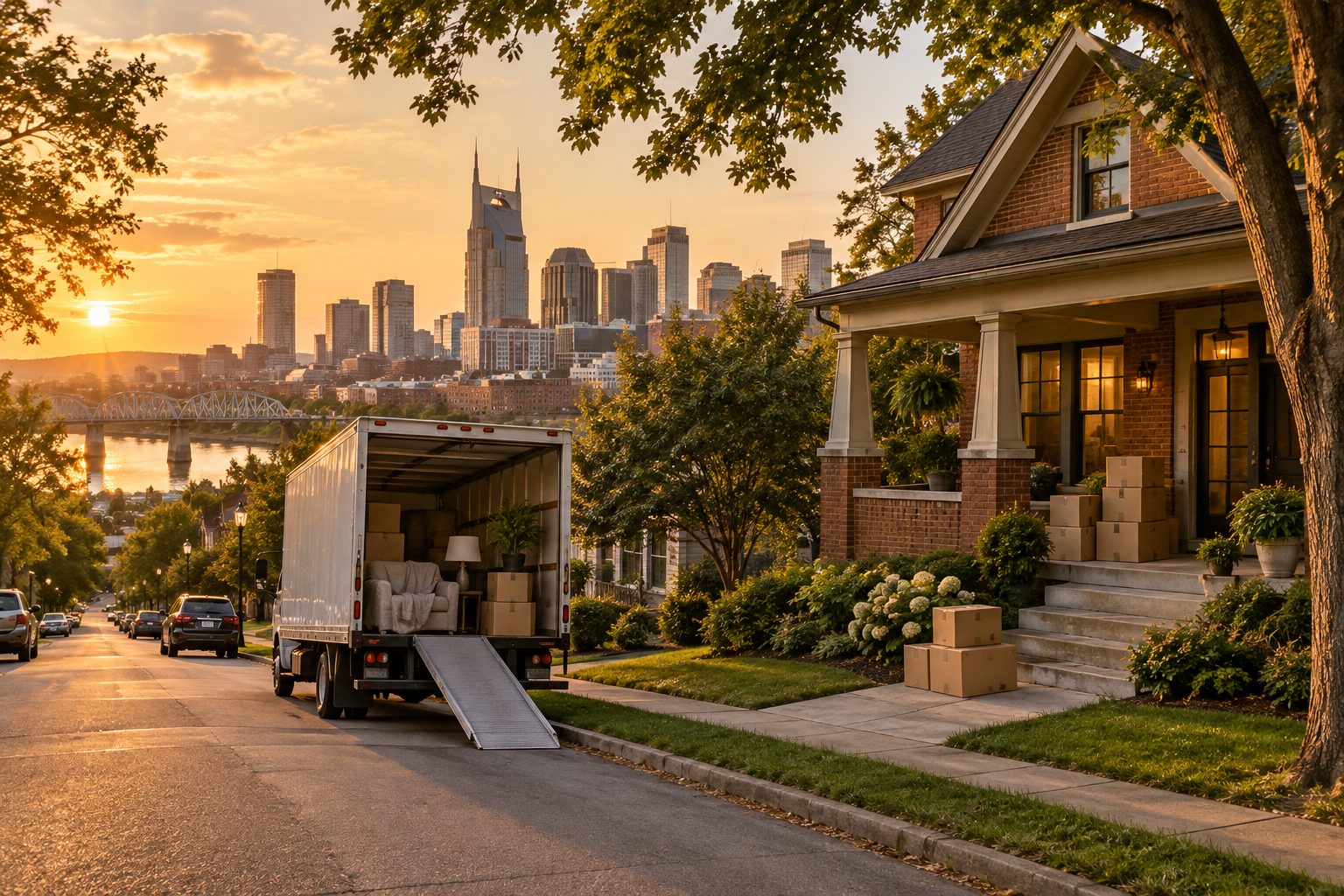
The steps for relocating to Nashville you need to know are: get pre-approved, choose your commute before your neighborhood, compare new construction against resale, verify property taxes and permits for the exact parcel, and bring your title company in early. Doing them in that order keeps the move clear and your budget honest.
What are the essential steps for relocating to Nashville you need to know?
The steps for relocating to Nashville you need to know come down to five moves: get pre-approved, choose your commute before your neighborhood, decide between new construction and a resale home, verify taxes and permits for the specific property, and line up your title company early. Do them in that order and the move stays manageable. Skip around, and you'll end up touring homes that don't fit your drive, your timeline, or your budget.
Key Takeaways
- In September 2026, Davidson County recorded 868 home sales with a median sale price of $449,000 and an average of 65 days on market, according to Redfin.
- New-construction and to-be-built listings in Davidson County had a median asking price of $644,900 on September 25, 2026, compared with $499,000 for existing homes.
- New homes averaged 85 days on market in the August 2026 comparison, versus 62 days for existing homes, so a new build can mean a longer search and more negotiating room.
- Tennessee's Real Estate Transfer Tax rate is $0.37 per $100 of consideration or value, and the state's default is that the grantee (usually the buyer) pays it, though your contract can address that.
- Property tax in Tennessee is set and collected locally, so you should verify a parcel's assessment and rate with the Davidson County Assessor rather than extrapolating from your old county or a neighboring one.
What does the Nashville market look like before you relocate?
It looks like a market with room to work in, not a frenzy. Inventory is healthy and homes are taking a while to sell, which gives a well-prepared relocating buyer more leverage than the headlines suggest.
Here's what the most recent data shows. In September 2026, the Greater Nashville REALTORS® region recorded 2,885 home sales, versus 2,881 in September 2025, and Nashville Post reported excess residential inventory and an average time on market above 55 days. Flat sales and plenty of choices mean you can afford to be selective.
For Davidson County specifically, Redfin's county page shows 868 homes sold in September 2026, a $449,000 median sale price, and 65 average days on market. Redfin is a portal, not the local MLS, so I treat those numbers as a useful snapshot rather than the final word. They also change every month.
Step 1: Get pre-approved and set your range
Talk to a lender before you tour, not after you fall for a house. A pre-approval tells you what you can comfortably carry, and it tells sellers your offer is real. If you're relocating for a job, ask your lender how your income documentation will be handled, because that can affect your timeline.
Step 2: Pick your commute before your neighborhood
Drive the route at the hours you'll actually travel it. A home that looks close on a map can feel very different at 7:45 on a weekday morning.
When clients are weighing options, I have them compare areas by drive and property type, not by reputation. Inside Davidson County, that might mean East Nashville, Germantown, Green Hills, Hermitage, or Old Hickory. Beyond it, people often compare Hendersonville and Gallatin to the north, Mt. Juliet and Lebanon to the east, and Franklin and Brentwood to the south. Each has a different mix of lot sizes, home ages, and price points, so the right answer depends on how you live day to day.
Every one of those choices is a trade between drive time, lot size, and what the home itself offers. That's the part I help my clients sort out before they ever write an offer.
Should you buy new construction or an existing home in Nashville?
It depends on your timeline and your tolerance for a premium. New construction cost more and took longer to sell in the most recent reported comparison, so it can be a smart buy for some people and an expensive detour for others.
According to The Tennessean, here is how Davidson County's new and existing homes compared:
| Measure (Davidson County) | New construction | Existing homes |
|---|---|---|
| Median asking price (Sept. 25, 2026) | $644,900 | $499,000 |
| Average days on market (August 2026) | 85 | 62 |
| Homes sold (August 2026) | 153 | 537 |
| Median sale price (August 2026) | $545,000 | $450,000 |
What does that price gap mean for you?
The gap between asking prices ($644,900 versus $499,000) is bigger than the gap between sale prices ($545,000 versus $450,000). In plain terms, new-construction sellers and builders may be asking more than they're getting. Longer days on market usually means there's something to negotiate, whether that's price, upgrades, or closing help.
The cheapest listing isn't always the best value, and the priciest one isn't either. A completed new home, a to-be-built home, and a ten-year-old resale all carry different timelines and trade-offs. Comparing them side by side is one of the most useful things we do together.
One more thing from my own playbook: even on a brand-new build, I still believe in an independent inspection. New doesn't mean flawless, and it's far easier to raise an issue before closing than after you've moved in.
What about permits if you build or renovate?
If you're buying land or planning a renovation, permits are part of the picture. Metro Nashville states that permits are required for new construction, additions, alterations, repairs, and replacements, and trade permits for electrical, plumbing, gas, or HVAC work may be required on their own or in addition to a building permit.
The process also starts with zoning. Metro describes a site as "zoned and ready" when its existing zoning matches the intended use, and applicants then go through the Department of Codes and Building Safety, which coordinates review among Metro departments. Requirements depend on the project and location, so confirm zoning for a specific parcel before you count on building what you're picturing. This is one of the most overlooked items on any list of steps for relocating to Nashville you need to know, especially for land buyers.
What should you verify on taxes and closing before you move?
Verify three things: the parcel's property tax picture, the Real Estate Transfer Tax, and who handles your closing. Each one is easy to check early and painful to discover late.
How does Tennessee property tax work for a new Nashville resident?
It's local, not statewide. Under the Tennessee Department of Revenue's explanation, county assessors appraise property, county commissions and municipal governing bodies set the rates, and county trustees and city collecting officials collect the tax. The bill is calculated from the appraised value, the assessment ratio, and the local rate.
That means you shouldn't assume your old tax bill, or a neighboring county's, tells you what you'll owe. A Nashville address generally sits in Davidson County, but the exact burden depends on the local jurisdictions and the property's assessed classification. Check the parcel with the Davidson County Assessor and the relevant collecting authority before you make an offer. If you're comparing a home inside Davidson County to one in Franklin or Mt. Juliet, run each parcel separately.
Who pays the Real Estate Transfer Tax in Tennessee?
Under the state's stated rule, the grantee or transferee pays it, which is usually the buyer. The rate is $0.37 per $100 of consideration or value, and the Department of Revenue's recordation tax manual says it is generally based on the greater of the consideration paid or the property's value.
That's the state's default, and the parties can address allocation in the contract, so your purchase agreement and closing statement control. The state's recordation tax page lays out the rule. I'll walk you through what your own agreement says before you sign.
Do you need a title company to buy in Nashville?
In Tennessee, a title company handles the title work and the closing, so you'll work with one on every purchase. Choose one early, because they coordinate title search, document signing, and recording.
When you set your budget, think in categories instead of a single number:
- Inspection and appraisal
- Lender charges
- Title company services and recording charges
- Prepaid property taxes and homeowners insurance
- HOA charges, where they apply
- Builder upgrades, if you're buying new
- Moving expenses
- The Real Estate Transfer Tax
Which of these can be negotiated, and who ends up paying them, is a contract question, not a universal Nashville rule. Your numbers depend on your loan, your property, and your contract, so that's a conversation to have with me and your lender before you write an offer.
Once your offer is accepted, the process moves quickly. My breakdown of what happens after you accept an offer in Nashville shows what to expect from day one through closing.
FAQ
What is the Nashville housing market like right now in 2026?
It's a balanced-to-buyer-friendly market with plenty of inventory. In September 2026, the Greater Nashville REALTORS® region recorded 2,885 sales, essentially flat from a year earlier, and Davidson County's median sale price was $449,000 on 65 average days on market per Redfin. Those numbers move monthly, so check them again when you're ready to buy.
Is it cheaper to buy a new-construction home or an existing home in Nashville?
Existing homes had the lower price in the most recent comparison. Davidson County's median asking price was $644,900 for new construction versus $499,000 for existing homes on September 25, 2026, and the August 2026 median sale prices were $545,000 and $450,000. Your actual cost depends on upgrades, incentives, and what you negotiate.
Which Nashville neighborhoods are best for commuters?
The best choice depends on where you're commuting to. I compare areas by drive time at your actual hours, lot size, and home type, and I encourage you to test the route in person. Areas inside Davidson County and surrounding towns like Hendersonville, Mt. Juliet, Franklin, and Brentwood all come up, and each offers a different drive and property mix.
What should I know about Nashville property taxes before relocating?
Property tax in Tennessee is administered locally. Your bill is based on the appraised value, the assessment ratio, and the local tax rate, according to the Tennessee Department of Revenue. Verify each parcel with the Davidson County Assessor instead of extrapolating from your current state or a nearby county.
What permits are required for building or renovating a home in Nashville?
Metro Nashville requires permits for new construction, additions, alterations, repairs, and replacements, and trade permits may apply for electrical, plumbing, gas, or HVAC work. Zoning has to match your intended use before the building permit process begins. The specifics depend on the project, so confirm with Metro's Codes Department before you commit to a property.
Ready to plan your move?
Those are the steps for relocating to Nashville you need to know, and the order matters more than the speed. Get your financing, commute, property type, taxes, and closing team lined up in sequence and the move gets much easier to manage.
I help relocating buyers sort through all of it, from first-time purchases to land and family properties across Middle Tennessee. If you're selling a home elsewhere or already own property here, find out what your home is worth to start planning your numbers, then book a consultation with me and we'll map out your Nashville move together.
Equal Housing Opportunity. Julian-Dre Smith, Affiliate Broker, EXIT Realty Refined. Regulated by the Tennessee Real Estate Commission (TREC). This article is general information, not legal, tax, or financial advice; confirm your own numbers with your title company, tax advisor, or lender.